Friday, October 25, 2019

Option Trading for Beginners

Barrons discussed index options trading,

"Zem Sternberg, one of the options market’s most respected traders, is using the low-volatility investing craze to power a strategy designed to produce returns that match the stock market’s upside while outperforming when the market swoons. He does this by actively trading index options and futures to hedge portfolios. The moving parts of the strategy are complicated, but the essence is simple: creating hedges that are constantly curated to protect portfolios without paying so much money as to harm overall profitability.

As investors keep selling options, which suppresses implied volatility, Sternberg’s investment firm, Lake Hill Capital Management, buys S&P 500 options and futures to create portfolio hedges at reduced prices. To further reduce the expense of continuous hedging, Lake Hill trades S&P 500 options and futures on a daily basis.

Sternberg’s firm essentially trades hedges like any other options position, which requires a deep understanding of thousands of index options and futures contracts. Most investors treat hedges like insurance policies. Even when they can sell them for big profits, many do nothing because they’re convinced that volatility will keep rising and increase the hedge’s value." Read more...

Index alternative trading is a topic that even those acquainted with stock exchange lingo typically know little about. But it is a way of trading choices that are essentially run the risk of complimentary, where all you are running the risk of is the premium you pay for the choice, which is usually a little portion of the potential profit you stand to make.

Let me discuss it in plain English if this sounds a little technical.

The initial approach of generating income on the stock market was to purchase a business's shares in order to offer them later at a profit.

Then choices came along. Instead of actually acquiring stock or shares, you might simply acquire the choice to purchase. You didn't become a shareholder so you couldn't vote and participate in at company conferences and weren't entitled to dividends, but as your primary concern was to merely make money from an increase in the business's value, and as you were probably doing the exact same thing with lots of companies, you probably weren't concerned about this.

If you consider the stock of XYZ Inc, present cost $10.00, is going to increase in the near future, then you might buy an option to purchase, state, 1,000 shares at $10.00 each in, say, 3 months' time. The premium, or cost, of the choice, might be 10 cents a share, total $100 (1,000 x $0.10).

Less expensive than purchasing 1,000 shares at $10 (overall cost $10,000), eh?

In addition, your danger is less, because your maximum loss, if the cost does not increase, is your premium of $100. If you purchased the shares your theoretical risk would be $10,000, though undoubtedly only if the business was to go bankrupt and the shares end up being worthless. In spite of this, options are an excellent option to shares, and you can have an interest in a lot more shares for your cash, which brings us to the next point.

If, as you anticipated, the share price does certainly increase, then you can make a massive profit. In our example, if the share rate rose simply decently to $12 from $10 within the three months, by no suggests a not likely occasion in the life of a company, then you would be able to offer your choice for $2,000, i.e. you 'd in effect buy the shares for $10 each, overall $10,000, and sell them for $12 each, total $12,000. The profit is, therefore, $2,000, less the initial $100 premium, giving a net profit of $1,900.

If it's as easy as that, then why would anyone sell an alternative to you? For the same factor that people sell shares - because they might be of the view that the shares will probably go down in worth.

Where does index options trading come into it? The difficulty with the example I've simply offered is that individual stocks can be unstable and it can be very challenging to forecast future rate movements unless you are extremely familiar with what's going on in that company.

Find a suitable index of the business in that sector, track it, and when you consider a relocation up-wards in cost is due then acquire the index choice. This has the advantage that any individual share volatility will be ironed out and you will be thus secured.

Of all the stock trading tools you might discover, this should be among the best. If you keep yourself well-informed in a couple of sectors as I've described, something that's not too hard to do, then you should be successful even more frequently than not, and given the risk/reward ratio described above you must be able to make regular revenues with very little danger.

Rather than in fact buying stock, or shares, you might simply buy the option to purchase. In spite of this, alternatives are an excellent alternative to shares, and you can have an interest in many more shares for your money, which brings us to the next point.

In our example, if the share price rose simply decently to $12 from $10 within the three months, by no indicates a not likely occasion in the life of a company, then you would be able to sell your alternative for $2,000, i.e. you 'd in effect purchase the shares for $10 each, overall $10,000, and offer them for $12 each, total $12,000. Where does index choice trading come into it? Discover an ideal index of the business in that sector, track it, and when you consider a move up-wards in cost is due then acquire the index option.


from Investment News, Investment Strategies, Investment Opportunities - Feed http://www.quantitativeinvestmentgroup.com/option-trading-for-beginners/

Thursday, October 24, 2019

Diversification of Investment Portfolio

BNPP discussed portfolio diversification in the current market,

https://investors-corner.bnpparibas-am.com/investment-themes/protection-strategies-bear-market/"With high correlations across traditional asset classes and geopolitical and economic risks steepening, navigating market turbulence and protecting your portfolio from downside threats requires innovation and a careful approach.
Correlations between asset classes are at an all-time high, and look likely to remain so for some time yet. I believe one key reason for this is that until recently, financial markets were still riding the highs coming off the recovery from the global financial crisis and we have seen significant changes in return, risk and correlation profiles across asset classes.

A far more effective way of applying the put strategy is to use the volatility index (VIX) to provide a better alert on market turbulence. This can act as a trigger so that when volatility rises to a pre-determined level, our put strategy can kick in and deliver the required protection." Read more...

We live in very volatile times. If you ask me if the S&P market will be higher in one year's time, I simply do not know the answer to that question. I have concerns about Gold in the sense that governments could start seizing it so in that regard is Gold a good investment?. Personally I think we don't operate in free markets when you see the intervention governments are doing at the moment.

One of the dangers of government intervention is that there are always unintended consequences. Always things happen that at the outset that was not perceived. Whether it's hyper inflation in a different country or mass crime, there are always unattended consequences when you mess with the money supply. What could happen to the s&p is that it could be very volatile. It may be a higher for a while and then lower, it will be hard to predict. We should be in a secular bear market but government interventions is making everything so volatile. When you print money, there are only the few that benefit. The middle class the lower class usually hurt the most as they get hit in the pocket.

The reason why diversification is so important especially at the moment in the investing world is because no asset class is 100% safe. Look at the M.F global disaster. Over 30,000 segregated accounts were wiped out. Gerald Celeste, a popular trends forecaster lost a multiple six figure sum in this disaster. This has been the eight biggest bankruptcy in American history. This is huge and don't think for a second that your money wherever you have it is safe. Governments can call a bank holiday, banks or brokerages can go bust, anything can happen. This is why having a good portion of your money in hard assets at the moment is a good play. Hard assets always hold their value. Buying some real estate now in a country that experienced a big bust could be a prudent play. Rent it out so the rent more than covers the mortgage. A hard asset such as this would be very hard to take away from you.

There are economists saying that real estate wont return for 20 years so again diversification is important. Your investment plan should be some funds in cash, some in property/real-estate, some in gold and silver and some in stocks. Stocks for example right now is some parts of the world are not that expensive. Also in a money printing environment, stocks usually go up as currencies are worth less.

Above all, diversify. I do think after the MF global disaster that holding cash in a bank account or stocks in a brokerage account is risky. Protect your assets so keep them out of harm's way.


from Investment News, Investment Strategies, Investment Opportunities - Feed http://www.quantitativeinvestmentgroup.com/diversification-of-investment-portfolio/

Wednesday, October 23, 2019

What is Volatility Trading?

J Pan outlines the importance of implied volatility,

https://www.ig.com/uk/trading-strategies/what-is-implied-volatility-and-how-to-use-it-191021"According to the CFA institute, implied volatility is a measure of the expected risk with regards to the underlying for an option. The measure reflects the market’s view on the likelihood of movements in prices for the underlying, having the tendency to increase when prices decline and thus reflect the riskier picture. Given this predictive nature, implied volatility serves as a useful tool in gauging the overall market condition and provides guidance for trading.
As the term ‘implied’ suggests, it is the implicit or expected future likelihood of the volatility we are projecting as compared to historical volatility. This can also make the reading relatively subjective and not 100% accurate all the time. Do note that although implied volatility is measured as a percentage, which typically surges with sharp declines in prices and decreases as prices retrace losses, it is truly directionless.

Implied volatility is commonly used by the market to pre-empt future movements of the underlying. High volatility suggests large price swings, while muted volatility could mean that price fluctuations may be very much contained.

It is also commonly used in the pricing of options, which as we know may become in the money (ITM) with high volatility, should the volatility help prices breach the strike price in the favourable direction. As such, options with high implied volatility tend to come with higher premiums." Read more...

If a particular market offers options upon it, volatility trading is another manner in which a view of the market can be expressed. As such, the investor is not taking a view of the direction of the market, but its momentum.

The greater the volatility of a market the higher the premium will be, as the probability of any option expiring profitably is greater. In essence it is increased uncertainty in a climate of volatile movement that causes options to be valued at a higher premium.

In order to eliminate the directional risk of the option, the investor needs to hedge the option in the underlying market. So, if it is a call option that is bought, the underlying must be sold. If it is a put option that is bought, the underlying must be bought. The opposite is required if these options are sold.
The ratio of options bought or sold, with respect to the number of underlying contracts used to hedge, is known as the Delta. The Delta refers to an options probability of falling in profit on expiry. It is a percentage that, along with numerous other mathematical indicators, is provided expressly by the Black & Scholes mathematical model. In simple terms it represents the probability that the option will expire in profit as analyzed on any given day, using the current underlying market position, days to expiry, the strike price, and the implied volatility used.

An option which is 'at the money' or at the current market position may go either way, and so has a delta of 50%. A call option that is far higher than the market, may have a delta of only 10%, but a put option that is far higher than the market, and so already destined to expire in profit, may have a delta or probability of expiring profitably, of 80%.

So if 10 options that have a strike price at the current market position, the delta would be 50% and so only 5 underlying contracts are needed to hedge it.

Now, as the market moves, wherever it moves, the investor needs to 're-hedge' the position, according to the delta at the new market position. An option that had a 50% delta when it was originally traded, with a 50 point move, will now have a delta that is less or maybe more according to the direction the market has moved. If probability of profitable expiry has increased the delta will be more, and if decreased, it will be less.

The investor will find that when having bought options, re-hedging requires selling underlying contracts when the market moves up, and buying contracts when it moves down. The price of the option changes also, but is offset according to the re-hedging which in this case is buying low and selling high - always making a profit. Buying options, is buying volatility and relies on the market being more volatile.
As options decay in value with time, due to their being an expiry date, re-hedging for a profit needs to occur frequently enough to offset this time decay each day.

Conversely, if options are sold, a loss is incurred each time the re-hedging takes place on a market move, and so selling options relies on the market being less volatile. Time decay works in favor of the option seller, and so losses on re-hedging are required to be less than the time decay received each day.
Simply stated, a seller of options still has unlimited liability, and a buyer, liability limited to the premium paid for the option.

With the use of software, an entire portfolio of options can be calculated to a net sum in terms of risk, volatility and delta for re-hedging.

Selling expensive options and buying cheap options, and maintaining re-hedging techniques, will accrue in profit if a mathematical model is used to value options to a benchmark value.


from Investment News, Investment Strategies, Investment Opportunities - Feed http://www.quantitativeinvestmentgroup.com/what-is-volatility-trading/

Tuesday, October 22, 2019

What is Currency Hedging?

Bower explains what currency hedging is,

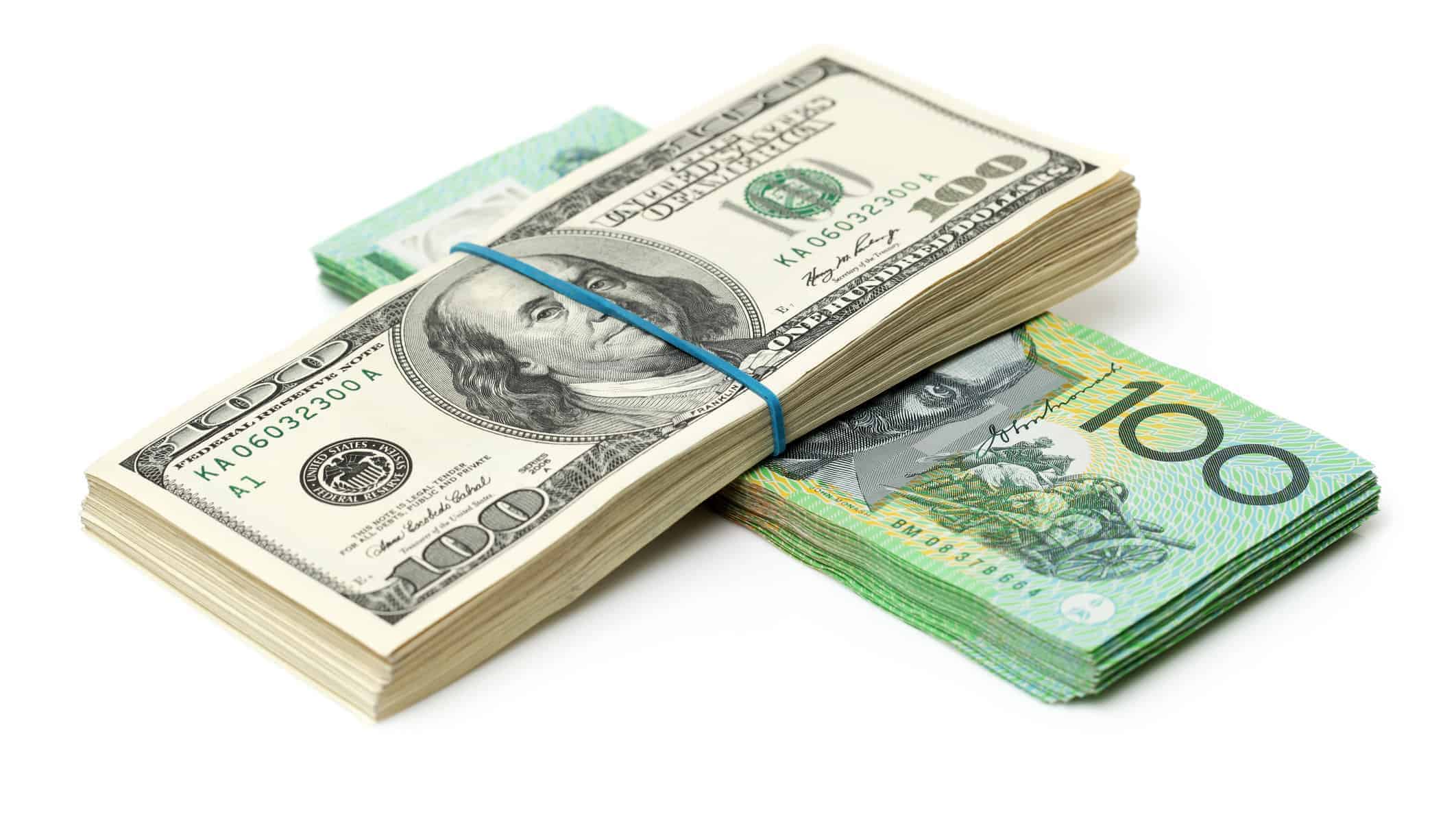
https://au.finance.yahoo.com/news/currency-hedging-024227015.htmlPut simply – currency hedging means taking exchange rate risk out of the equation. Exchange rate risk is the potential for an investment not priced in Australian dollars to lose value due to currency fluctuations.

For example, say if you bought five shares of Apple Inc. from your broker for US$200 each (not Apple’s current share price, but bear with me) at an exchange rate of $1/US $0.75. You’ve just spent US$1,000 or $1,250 in Aussie dollars. Then say the greenback and Aussie dollar reach parity three months later, but Apple shares stay at $200. You’ve just lost $250 Aussie dollars from the value of your shares, even though they’re worth the same in US dollars.

If this investment was hedged, the currency movements would not affect the value of your shares, meaning you would only see a return if Apple shares appreciated in value. Although this sounds fantastic, bear in mind that it works the other way too. Read more...

International currencies don't ride the trends in isolation. The apparent technical motion in between 2 currencies in a set may trigger a result in the behavior of each separate currency. A third currency will likewise have some bearing increasing or fall of a relatively unrelated pair, in the view of an intermediate or beginning trader. Even experienced trend cowboys may miss out on the odd substantial occasion that results in a trade loss.

Technical analysis frequently consists of the bulk of the independent speculator's trade decisions, however, some attention to basic news need to be included for a total overview of what is taking place in the market at that particular moment. Neither weather condition, beetles, dry spell, hostile takeovers nor indicted CEO's have much genuine bearing on currency values, but the timing of the release of economic reports need to identify if a trade is practical or not.

An increasing tide raises all ships, however, the trading ocean is made of waves, with deep troughs and high crests. A rising ship may have a tether to another that is falling the other side of the swell. As one currency in a trade set rises, it may pull another currency up with it, or just the opposite. A drop in the Euro might permit an increase in the value of the GBP, which will certainly have an influence on the USD/GBP spread.

When considering the merits of a good trade, also take into account the activity of each currency's most carefully associated cousin. When trading the Canadian dollar, you should certainly think about the relative motion, or lack thereof, in the United States dollar. Canada's biggest trading partner is the US, so fluctuations in the United States economy may or might not have an impact on the Loonie, depending upon the gravity of the news.

The UK kept its own currency, the British Pound, but the economic organization of Europe can still influence the directional pattern of the Pound Sterling. The French Franc will likewise be swayed by the enterprise of the common Euro. As you evaluate your charts, make sure to make a quick evaluation of any volatile activity in any comparable currency.

The typical day trader and specific speculator can not possibly stay up to date with all the financial press releases every day and still have time to consume and trade lunch, and old news has currently shown itself in the charts. One must pay attention to important published financial developments, and typically prevent trading on report days. But the trend will suggest market belief, and great profits can be made by keeping the major focus on technical analysis.

International bankers and currency houses have developed complex mathematical models to track currency connection, however, these are beyond the scope of this article. In summary, just examine how related currencies are trending, when preparing a trade.

The apparent technical movement between two currencies in a pair may cause a result in the behavior of each separate currency. As one currency in a trade set increases, it may pull another currency up with it, or simply the opposite. International bankers and currency homes have actually developed complex mathematical models to track currency connection, but these are beyond the scope of this article. In summary, simply inspect how associated currencies are trending, when preparing a trade.


from Investment News, Investment Strategies, Investment Opportunities - Feed http://www.quantitativeinvestmentgroup.com/what-is-currency-hedging/

Monday, October 21, 2019

Is it Time to Invest in High-dividend Stocks?

Experts said that corporate buybacks are plummeting and suggested investing in high-dividend stocks,

https://www.cnbc.com/2019/10/21/goldman-warns-buybacks-are-plummeting.html“Corporate buybacks are “plummeting” as companies tighten their purse strings, and it could have a big impact on the market, Goldman Sachs warned in a note to clients.

In the second quarter, S&P 500 share buybacks totaled $161 billion, about 18% less than the first quarter, the firm found. The amount spent on buybacks this year is down 17% from a year earlier, although it is on track to be the second highest total on record, Goldman said.

As corporate spending slows, investors hunting for yield should look to high-dividend stocks, the firm said.” Read more…

Skyrocketing technology stocks led the longest bull market in history during the 1990s, driving financiers to avoid stocks of dividend-paying companies.

The constant stock efficiency of more conservative firms just appeared pale in contrast. Now, the rising rate of interest and slowing corporate revenues are causing investors to again rely on the tried-and-true: premium companies with strong cash flows, strong incomes, and a healthy dividend stream.

A business that can dedicate to paying a routine dividend are ones that generally are positive and essentially strong about their future. A business's dividend history is a good sign of its desire to share earnings and demonstrate accountability to investors. In durations of market unpredictability, these qualities become specifically appealing to financiers.

Stocks of business that pay dividends generally have less rate fluctuation than stocks of non-dividend payers. The dividend can smooth and develop a cushion out a stock's cost volatility. It is very important to remember, however, that although dividend-paying stocks can include diversification to your portfolio and help lessen volatility, they still include threats.

The 2003 Tax Act added attraction to dividend-paying stocks. It decreased the tax rate for individuals on certified dividends from as much as 38.6 percent to simply 15 percent, depending upon your income tax bracket.

This appreciation for dividends has spawned a renewed interest in mutual funds that pay dividends like the American Century Equity Earnings Fund (TWEIX), which has been buying dividend-paying stocks for more than a year. The companies in the fund typically are basically strong and well-established, have steady earnings, a solid balance sheet and a history of paying dividends.

The size of dividends also is on the rise. 3 quarters of the business in the S&P 500 Index pay dividends, and more than half of them increased their payouts throughout 2004. That's proof of a lot of strong balance sheets. A service needs to have the earnings to pay a dividend and a strong balance sheet to increase one.

Investors' choice for dividend-paying stocks is most likely to continue, and so will the ability of numerous companies to continue paying dividends. A number of years of economic uncertainty have actually driven companies to cut expenses, reduce debt and check their capital spending. That implies a number of them now have a lot of cash on their balance sheets.

This combination of lower debt and larger cash swimming pools gives them the capability to increase dividends. Even with the current focus returning more cash to investors, the current dividend payment ratio is still below the historic average.

A company's dividend history is a great sign of its desire to share earnings and demonstrate accountability to investors. Stocks of business that pay dividends typically have less cost change than stocks of non-dividend payers. The dividend can smooth and create a cushion out a stock's price volatility. Financiers' choice for dividend-paying stocks is likely to continue, and so will the ability of lots of businesses to continue paying dividends.


from Investment News, Investment Strategies, Investment Opportunities - Feed http://www.quantitativeinvestmentgroup.com/is-it-time-to-invest-in-high-dividend-stocks/

Sunday, October 20, 2019

Why People Invest In Gold?

Valuewalk reported that investment funds are investing in gold,

https://www.valuewalk.com/2019/10/gold-bullion-prices/“Gold bullion prices continued to rally in August, driving strong performance in gold stocks, although that strength wasn’t enough to pull Sturgeon Capital into the green for the month. The fund was down 3.09% for August, bringing its year-to-date returns to -5.1%. Difficult returns in Kazakhstan and Turkey weighed on the Silk Road-focused fund’s returns last month.

Gold bullion prices continued to rally in August, driving strong performance in gold stocks, although that strength wasn’t enough to pull Sturgeon Capital into the green for the month. The fund was down 3.09% for August, bringing its year-to-date returns to -5.1%. Difficult returns in Kazakhstan and Turkey weighed on the Silk Road-focused fund’s returns last month.” Read more…

Gold. Uncommon, stunning, and distinct. Treasured as a store of value for countless years, it is a safe and secure and essential property. It has actually maintained its long term worth, is not straight affected by the economic policies of individual countries and does not depend upon a 'promise to pay'.

Entirely free of credit danger, although it bears a market danger gold has actually always been a safe haven in unclear times. Its 'safe haven' associates draw in wise financiers. Gold has actually proved itself to be an effective way to handle wealth.

For a minimum of 200 years, the price of gold has equaled inflation. Another crucial reason to purchase gold is its constant shipment within a portfolio of possessions. Its performance tends to move separately from other investments and of key financial signs. Even a small weighting of gold in an investment portfolio can help reduce overall danger.

Most financial investment portfolios are invested primarily in conventional monetary properties such as bonds and stocks. The reason for holding diverse financial investments is to secure the portfolio against variations in the value of any single possession class.

Portfolios that contain gold are normally more robust and much better able to deal with market uncertainties than those that do not. Adding gold to a portfolio introduces a completely various class of assets.

Gold is uncommon because it is both a commodity and a financial property. It is a 'reliable diversifier' due to the fact that its efficiency tends to move individually from other financial investments and essential economic signs.

Research studies have actually shown that conventional diversifiers (such as bonds and alternative possessions) typically fail during times of market stress or instability. Even a little allowance of gold has been shown to substantially enhance the consistency of portfolio performance throughout both unstable and stable monetary periods.

Gold improves the stability and predictability of returns. Due to the fact that the gold coast is not driven by the same elements that drive the efficiency of other assets, it is not associated with other possessions. Gold is also significantly less unstable than almost all equity indices.

The value of gold, in terms of real products and services that it can purchase, has actually remained remarkably stable. In contrast, the buying power of numerous currencies has actually normally decreased.

Traditionally, access to the gold market has actually been through investment in physical gold, usually as gold coins or little bars, or, for larger amounts, by way of the over-the-counter market; gold futures and choices; gold mining equities, frequently packaged in gold-oriented mutual funds.

Completely free of credit danger, although it bears a market danger gold has actually always been a safe and secure refuge in uncertain times. Another essential factor to invest in gold is its constant delivery within a portfolio of properties. Even a little weighting of gold in a financial investment portfolio can assist reduce general risk.

It is not associated with other properties due to the fact that the gold price is not driven by the same aspects that drive the efficiency of other properties.


from Investment News, Investment Strategies, Investment Opportunities - Feed http://www.quantitativeinvestmentgroup.com/why-people-invest-in-gold/

Thursday, October 17, 2019

How Low Interest-Rate Environment Affects Your Investments

Gundlach believed that interest rates have bottomed for the year,

Growing fears about a possible global economic slowdown prompted Treasury yields to hit their historic lows a few weeks ago. The so-called bond king said yields won’t go any lower this year. That was the bottom for the 10-year Treasury yield, he said.

“It’s not a great idea to bet on low interest rates,” Gundlach said in an investor webcast on Tuesday. When asked if he would buy a 10-year Treasury now, Gundlach said “absolutely not.”

The yield on the benchmark 10-year Treasury breached below 1.5% in August, while the 30-year Treasury bond yield fell below 2% for the first time ever as the U.S.-China trade war escalated. Read more...

While interest rate has actually risen, they stay low by long-term historical requirements, triggering difficulties for long-lasting financiers like pension funds.

Since we're a pension, we invest considerably in fixed-income possessions. A foundation of our member-driven financial investment technique is to reduce the interest-rate level of sensitivity in our liabilities," he adds, noting the pension fund owns a considerable portion of bonds to achieve this.

At this stage of the game, we are probably a little light on where I wish to be in bonds over the longer term, and that's just a reflection again of the lower rate of interest environment and the requirement to generate returns that are sufficient to keep the strategy sustainably

The fund likewise invests substantially in options, recently internalized capital markets and is beginning to build value-add programs around its public markets direct exposure. We've got value-add programs within the illiquid options, where we have a long-lasting, effective performance history, and now we're developing them in the liquid capital markets.

This is essential due to the fact that in a low interest-rate environment the risk-free rate of return isn't extremely high, states Davis, explaining one possible source of returns is the threat premia from purchasing stocks, bonds, and other capital market assets. These possessions are really expensive mainly because low interest rates have pushed investors out the threat spectrum, he includes. "They were encouraged to buy more dangerous possessions, that quote up the cost of dangerous possessions, causing the expected future go back to drop. You have actually got an environment now where you're not making really much in terms of risk premia and the safe rate is not especially high."

The other source of potential return is value-add or alpha. That's where we are putting our emphasis, he states, noting financiers can't disregard the evaluations in the market and need to have exposure to capital market instruments.

One method the fund is developing worth and getting direct exposure is through personal markets. You will get equity exposure by remaining in private equity, but because of the nature of how we invest, our company believe that we have a much better opportunity for value development there than we would in the public equities market. If you look at our overall equity direct exposure, which is not that high, partially because of where appraisals are, partially because we're a fully grown pension plan and we can't bear that much danger, we've picked to take mainly our equity direct exposure via the private markets for that value production reason.

Low interest rates likewise affect alternatives for the exact same reason they affect public markets. The private market assets are generally a riskier property than a bond. Just as bond yields are going down, or simply as safe interest rates are going down, assessments in the riskier properties, consisting of the private market assets, are going up.

We're continuing to find, on a really selective basis, really good risk-adjusted return opportunities in the real estate, infrastructure and private equity space. Where we believe it's more tough is simply in the traditional public market sphere-- specifically if you're a passive investor.

Low interest rates also impact alternatives for the very same factor they affect public markets. The private market assets are typically a riskier possession than a bond. And so when they move into that market they are bidding up the cost and decreasing the expected return. Simply as bond yields are going down, or simply as safe interest rates are going down, assessments in the riskier properties, consisting of the private market assets, are going up.


from Investment News, Investment Strategies, Investment Opportunities - Feed http://www.quantitativeinvestmentgroup.com/how-low-interest-rate-environment-affects-your-investments/